
Retinal Diseases, Laser Procedures and Surgery
Laser Procedures
Laser Photocoagulation for Vitreo-Retinal Conditions
What is a Laser?
A laser is a concentrated, highly focused beam of light. Lasers are produced by passing an electric current through a gas or a crystal, and the specific substance used determines the laser's color, its wavelength, and what it can treat. That variety is why ophthalmologists rely on several different laser types, each suited to a different job inside the eye.
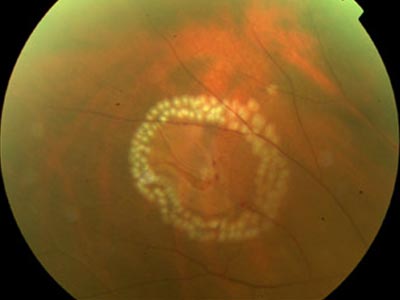 In the office retina specialists use two types of laser procedures to treat the eye, laser photocoagulation (thermal for diabetic vascular leak) and ocular photoactivation (PDT for macular degeneration).
What makes a laser so useful in retinal care is precision. The beam can be aimed at a spot on the retina measured in fractions of a millimeter, treating the tissue that needs it while leaving the surrounding retina untouched. No incision is required, and the light passes harmlessly through the front of the eye to reach its target at the back.
How is a Laser Used in Ophthalmology?
Retina specialists use laser light in two fundamentally different ways, and both are performed right in the office.
Laser photocoagulation uses a thermal laser, meaning the beam's energy is absorbed by the tissue and converted to heat. That heat creates tiny, controlled spots of scarring, which can seal a retinal tear to the eye wall, close off blood vessels that are leaking fluid, or reduce the retina's demand for oxygen so it stops growing abnormal new vessels. This is the workhorse of retinal laser treatment, used most often for diabetic vascular leakage.
Ocular photoactivation, better known as photodynamic therapy or PDT, works differently. Rather than burning tissue, a light activated medication is given first and then a low energy laser is aimed at the target area, activating the drug only where the beam lands. PDT has been used in the treatment of certain forms of macular degeneration.
Laser retinopexy is a third application, frequently performed alongside surgical repair of a retinal detachment, including vitrectomy and pneumatic retinopexy. Here the laser welds the retina to the underlying tissue, reinforcing the repair so the retina stays in place as it heals.
What Eye Problems Are Treated With Laser Procedures?
Retina specialists most commonly use lasers to treat diabetic eye disease and retinal tears or detachments.
Retinal tears and retinal detachments. A tear in the retina can allow fluid underneath it and progress to a detachment, which threatens your vision.
When a tear is caught early, it can often be repaired with a laser right in the clinic. The thermal laser creates a ring of scar tissue around the tear that seals the retina back against the wall of the eye, functioning like a series of spot welds that stop fluid from getting through.
Diabetic retinopathy. Diabetes damages the small blood vessels of the retina, causing them to leak fluid into the macula, a condition called diabetic macular edema. Diabetes can also drive the growth of fragile new vessels that bleed and form scar tissue capable of pulling the retina loose. Laser treatment addresses both problems: it reduces leakage from damaged vessels and discourages abnormal new vessels from growing.
Other retinal conditions. Lasers are also used in the management of retinal vein occlusions, certain peripheral retinal lesions such as lattice degeneration in higher risk eyes, and other conditions involving abnormal or leaking retinal blood vessels. Your retina specialist will explain whether laser is the right tool for your particular diagnosis.
What Are the Different Types of Retinal Laser Treatment?
Not all retinal laser treatments are alike. The pattern, location, and purpose of the laser spots differ substantially depending on the condition being treated.
Focal laser. The beam is directed at specific leaking blood vessels or microaneurysms near the macula, sealing them to reduce the swelling that blurs central vision. This is a targeted treatment involving relatively few laser spots, used chiefly for diabetic macular edema.
Panretinal photocoagulation (PRP), or scatter laser. Rather than targeting individual vessels, the laser is applied in a widespread pattern across the peripheral retina, sometimes involving hundreds or over a thousand spots and occasionally spread across more than one session. By treating the oxygen starved peripheral retina, PRP lowers the stimulus driving abnormal new vessel growth in proliferative diabetic retinopathy. It preserves the central vision that matters most, though some patients notice changes in peripheral or night vision afterward.
Laser retinopexy. Applied around a retinal tear or an area of retinal weakness, this treatment creates adhesions that hold the retina in place and prevent a detachment from developing or recurring.
What Happens During a Laser Procedure?
Laser procedures are performed in the office and usually take only a few minutes to perform, though you should plan for a longer visit overall. Here is what to expect:
• Your pupils are dilated with drops so your doctor has a clear, wide view of the retina.
• Numbing drops are placed in the eye, and for some treatments an anesthetic injection around the eye may be used for comfort.
• A special contact lens is placed on the surface of your eye. This lens focuses the laser precisely and holds your eye steady during treatment.
• You sit at a machine similar to the one used for a routine eye exam, resting your chin and forehead against the supports while your doctor delivers the laser.
• You will see bright flashes of light during treatment, and you may hear a faint clicking sound as each laser spot is applied.
• The number of laser spots varies enormously by condition, from a small cluster around a retinal tear to a widespread pattern covering the peripheral retina.
Does a Laser Procedure Hurt?
Most patients find laser treatment more uncomfortable than painful, and many feel very little at all. The eye is numbed beforehand, so what you notice is usually the brightness of the flashes and a sensation of pressure from the contact lens.
The experience does vary by treatment type. Focal laser near the macula involves relatively few spots and is generally well tolerated. Panretinal photocoagulation involves far more spots over a wider area, and some patients feel a pinching or aching sensation, particularly toward the end of a long session. If you find the treatment uncomfortable, tell your doctor, because additional numbing can be given, and longer treatments can often be divided across multiple visits.
What Should I Expect After a Laser Procedure?
Recovery from an in office laser procedure is usually straightforward, and most people return to their normal routine quickly. Common experiences afterward include:
• Blurred vision for several hours from the dilating drops, so arrange for someone to drive you home.
• Sensitivity to light, which sunglasses will help considerably.
• Spots or dim patches in your vision corresponding to the laser treatment, which typically fade over the following days to weeks.
• Mild aching or a gritty sensation in the eye for a day or so, particularly after a longer session.
• A follow up appointment to confirm the treatment achieved its goal, since laser works gradually rather than instantly.
It is important to understand what laser treatment is designed to do. In most cases the goal is to stabilize your vision and prevent further loss rather than to restore vision you have already lost. Sealing a retinal tear prevents a detachment; treating macular edema reduces swelling; PRP protects against the catastrophic bleeding of advanced diabetic disease. Improvement in your eyesight can happen, but preservation is the primary aim.
What Are the Risks of Laser Procedures?
Laser procedures are very effective and have a long track record of safety, but like any medical procedure they carry potential risks and side effects. Depending on the treatment and its location, these can include:
• Small blind spots corresponding to treated areas.
• Reduced peripheral vision or night vision, most often after extensive panretinal photocoagulation.
• Temporary blurring or distortion of vision.
• Bleeding within the eye.
• Accidental treatment of the wrong area of the retina, which is rare.
• Scarring that enlarges over time.
• The need for repeat treatment sessions.
Your retina specialist will discuss the specific risks that apply to your treatment, weighed against the risk of leaving your condition untreated.
Frequently Asked Questions About Laser Procedures
How Long Does a Retinal Laser Procedure Take?
The laser itself usually takes only a few minutes, though a widespread treatment such as panretinal photocoagulation can run considerably longer. Plan for your overall visit to take one to two hours, since your pupils need time to dilate beforehand and your doctor will examine your eye afterward.
Will I Need More Than One Laser Treatment?
Sometimes. A retinal tear is often sealed in a single session, while panretinal photocoagulation is frequently divided across two or more visits to keep each session comfortable and reduce swelling. Conditions like diabetic macular edema may need repeat treatment over time if leakage returns, and your retina specialist will monitor your response and advise you.
Is Laser Treatment the Same as Laser Eye Surgery for Vision Correction?
No, and this is a common source of confusion. LASIK and similar vision correction procedures reshape the cornea at the front of the eye so you can see without glasses. Retinal laser procedures treat disease at the back of the eye, and they do not change your prescription or reduce your need for glasses. The two share the word laser and almost nothing else.
Can I Drive Home After a Laser Procedure?
No. Your pupils will be dilated and your vision blurry for several hours afterward, and your eyes will be sensitive to light, so arrange for someone to drive you. Bring sunglasses for the trip home.
Laser or Injections: Which is Better for Diabetic Eye Disease?
They serve different purposes, and many patients receive both. Anti-VEGF injections have become the primary treatment for diabetic macular edema because they often improve vision rather than simply stabilizing it. Laser remains valuable for specific leaking vessels, for patients who cannot maintain a frequent injection schedule, and above all in the form of panretinal photocoagulation for proliferative disease, where its protective effect is long lasting. Your retina specialist will recommend the approach that fits your disease pattern and your circumstances.
Does Laser Treatment Cure My Retinal Condition?
Laser treatment controls disease rather than curing it. Sealing a retinal tear is definitive for that tear, but it does not prevent new tears from forming elsewhere. In diabetic eye disease, laser addresses the damage that diabetes has already caused while the underlying disease continues, which is why ongoing blood sugar control and regular dilated eye exams remain essential after treatment.
If your eye doctor has recommended a laser procedure, or you have been diagnosed with a retinal tear, diabetic retinopathy, or another condition that laser can treat, please contact Florida Retina Institute or call our office to speak with a member of our team. With 21 locations throughout Florida and Georgia, expert retina care is always close to home.